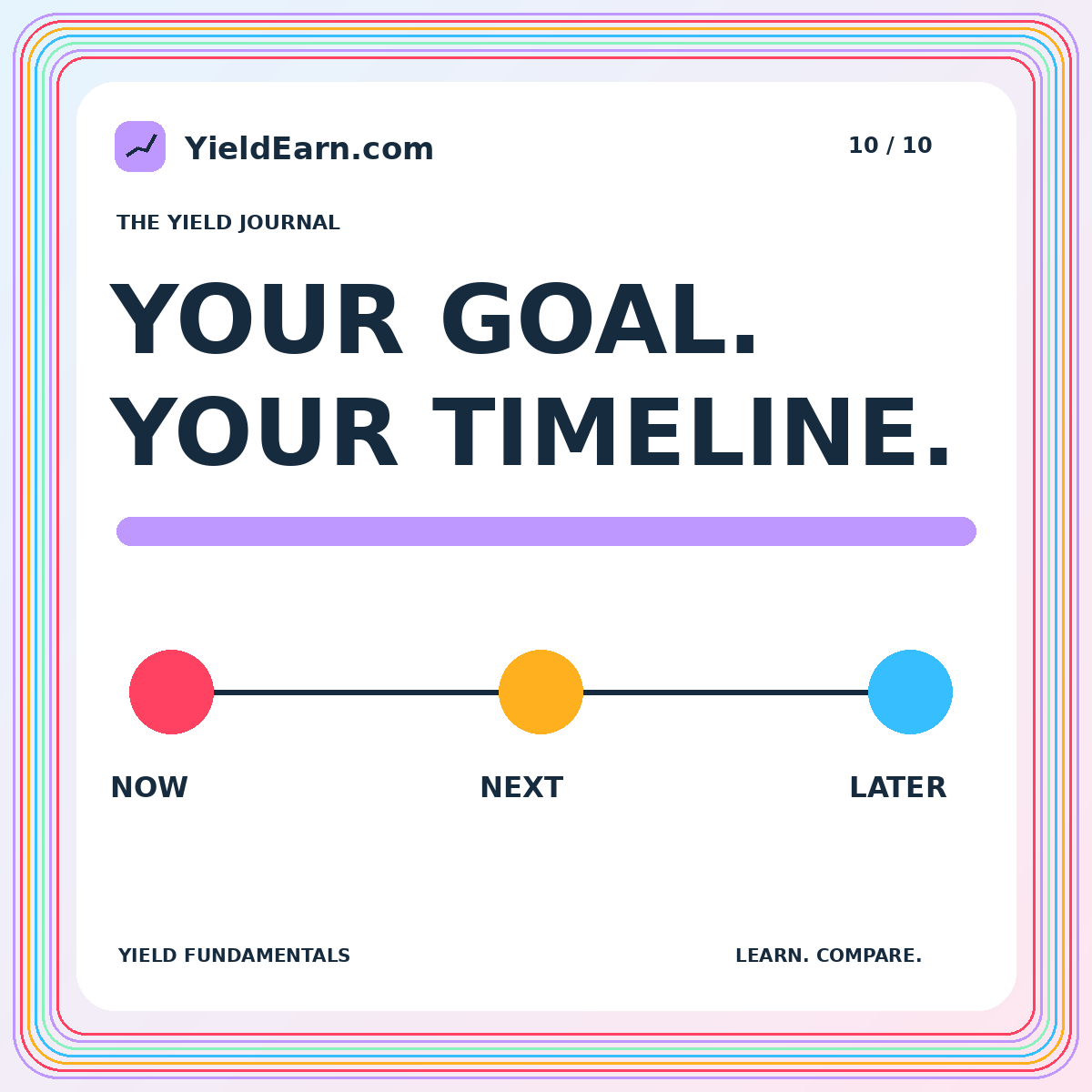
A yield percentage does not know when your next bill is due. It does not know whether a purchase can be delayed, whether a market loss would disrupt essential spending, or how much cash is already available elsewhere. Those facts come before selecting a product. The most useful starting point for yield-earning investments is a description of the goal, not a ranking of rates.
This article provides a general planning framework, not a personal portfolio allocation. Investor.gov's explanation of asset allocation identifies time horizon and risk tolerance as important considerations. Here we turn those ideas into practical questions that can be asked before examining savings, CDs, bonds, or dividend-paying investments.
Give each pool of money a job
Begin with a sentence containing the purpose, amount, and earliest possible spending date. “Money for a required payment next spring” is more useful than “medium-term savings.” Add whether the amount is firm or uncertain and whether the date can move. A goal with a flexible budget and date can tolerate different outcomes from a fixed obligation.
Do not assume the entire balance in an account serves one purpose. It may contain an emergency reserve, money for a planned expense, and funds intended for a much later goal. Separating those jobs on paper can reveal why one product does not need to serve everything. This is an organizational exercise; it does not prescribe how much anyone should allocate to each category.
Distinguish need from preference
A person may prefer an attractive return while needing access to principal on a specific date. When those priorities conflict, the constraint should be visible. Ask what happens if the money is unavailable or worth less at the time it is needed. Would the purchase be postponed, another resource used, or an essential obligation missed?
The consequence matters as much as the calendar. Two goals twelve months away can have different flexibility. An optional trip may be adjustable; a binding payment may not be. Instead of assigning products based only on broad labels such as short term or long term, describe how much uncertainty the goal can accommodate and what alternative resources genuinely exist.
Separate willingness to take risk from capacity
Someone can feel comfortable with market fluctuations while lacking the financial capacity to absorb a loss on money needed soon. The reverse is also possible: a person may have flexibility but feel uncomfortable with volatility. Treat emotional tolerance and practical capacity as related but distinct questions. Neither should be inferred from age or a single stated preference.
A simple hypothetical test asks what would happen if an investment were worth less just before the planned expense. Do not attach an invented probability to the scenario. Its purpose is to reveal dependencies. If the response requires borrowing, selling another uncertain asset, or delaying an unavoidable payment, those consequences belong in the plan rather than remaining hidden behind a yield target.
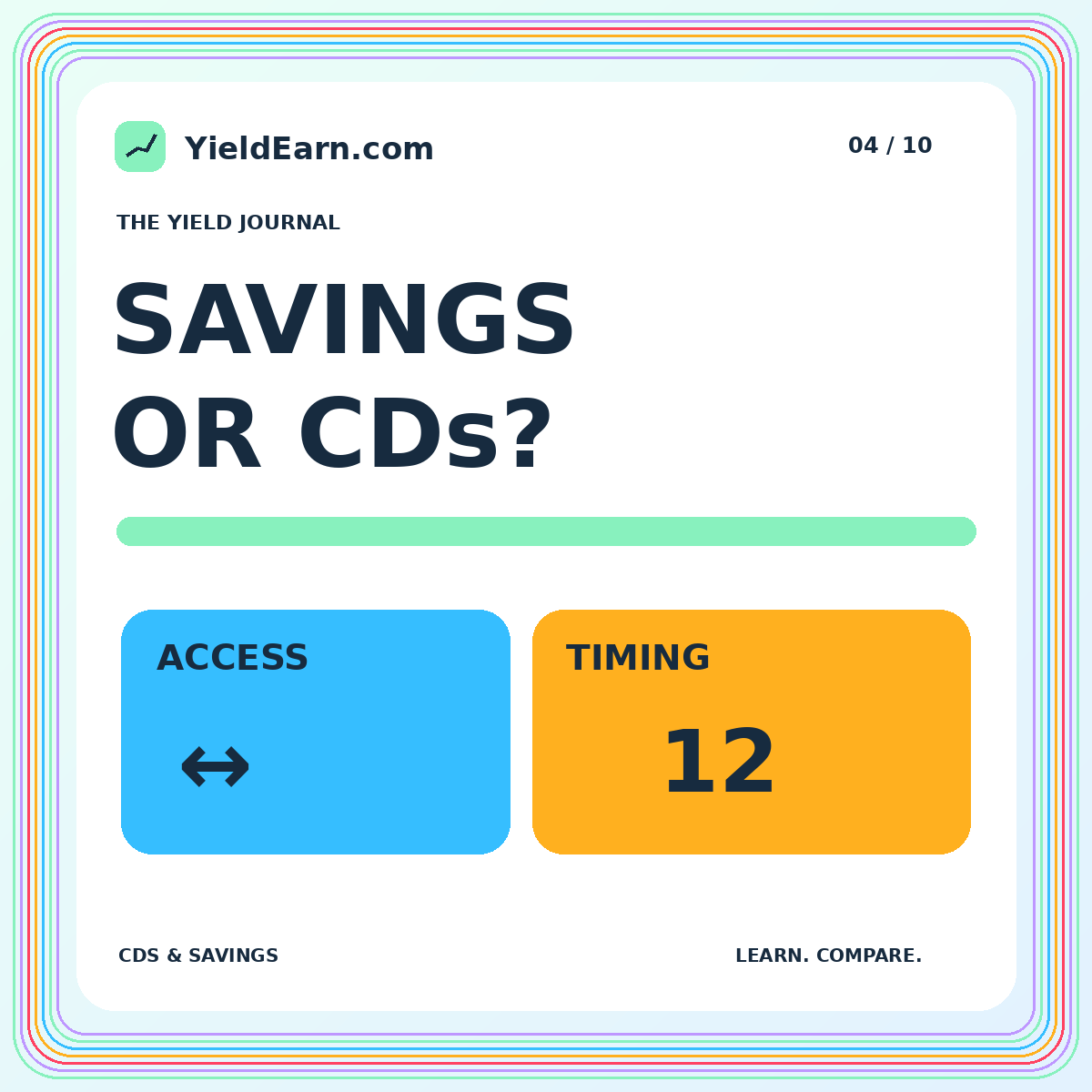
Accessible cash serves a different function
Money reserved for unpredictable needs benefits from an explicit access plan. Identify where it sits, how it can be transferred or spent, and what restrictions apply. A product can be stable in nominal value yet inconvenient for a particular payment method. Practical access involves more than the absence of a long maturity date.
The high-yield savings guide presents questions about variable rates, balances, fees, and transfer arrangements. Its role in this framework is not to declare savings universally superior. It is to show that liquidity has a purpose. The interest earned on accessible money is one feature of the arrangement, not the sole measure of whether it is doing its job.
Dated commitments require a maturity map
For a known future expense, write down when each candidate product makes money available under its terms. A CD maturity or bond payment schedule may help organize the timing, but only when matched to the actual date and amount needed. Leave operational room for the steps between receiving proceeds and making the final payment.
A maturity beyond the goal creates an early-exit dependency. A maturity before the goal creates a reinvestment or holding decision for the gap. Neither is automatically unacceptable, but both should be described. Our CD ladder article shows how staggered dates can structure decisions without claiming that future renewal rates are already known.
Longer horizons do not erase investment risk
A longer period can provide more flexibility to tolerate market changes, but it does not guarantee a profitable result or make every high-yield security appropriate. Business failures, credit problems, concentration, costs, and changing circumstances still matter. An income-paying investment remains an investment, not a deposit account with a more impressive percentage.
For bonds, distinguish holding-to-maturity assumptions from a plan that may require an early sale. For dividend-paying shares, distinguish anticipated distributions from guaranteed cash receipts. The bond guide and dividend guide explain these structures separately. Combining them into a single “passive income” label can hide the very differences needed to assess a goal.
Build a cash-flow calendar, not just a yield target
A target such as “earn 5%” leaves the timing of receipts undefined. A calendar shows opening commitments, expected distributions, maturities, and planned spending. Label uncertain payments and future reinvestments as assumptions. This makes it easier to see whether a theoretically attractive annual figure actually supports the months when cash is needed.
Imagine a fictional plan with quarterly receipts and monthly expenses. Even if the annual totals match, the timing can create shortfalls. The solution is not found by increasing the displayed yield alone. The plan needs an explanation for the periods between receipts. Keeping the calendar visible prevents an annual average from concealing practical gaps.
Stress-test the plan without predicting the future
Use a few plain scenarios: a variable rate falls, a distribution is reduced, an expense arrives earlier, or an investment must be sold below the purchase price. These are not claims about what will happen. They are questions about whether the arrangement still functions when an important assumption changes.
For each scenario, write the consequence and the potential response. A plan that only works when every favorable assumption holds deserves closer examination. Avoid inventing probability scores to make this exercise look quantitative. Its value comes from exposing dependencies and identifying which uncertainties matter most, not from pretending to know their likelihood from a generic website article.
Include fees and purchasing power without mixing them up
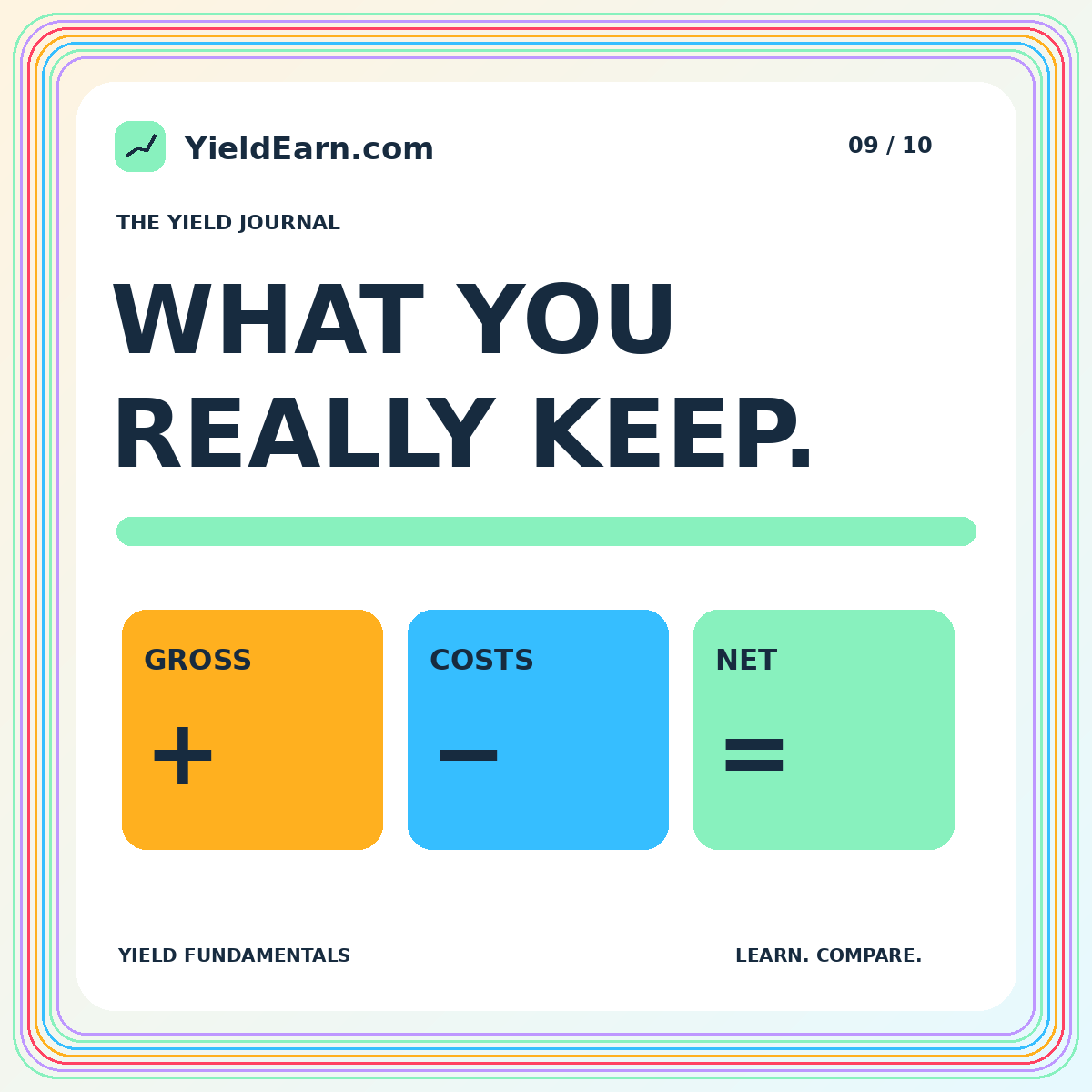
A goal is funded with net available money, not a headline gross yield. Estimate relevant costs using the actual product terms and consider applicable taxes with appropriate guidance. Also update the expected cost of the goal as new information becomes available. A rising balance can still fall behind a purchase whose price has risen faster.
The fees and inflation guide explains how to separate these layers. Keep each assumption explicit. Do not subtract a fee twice, assume a tax rate that does not apply, or treat a broad inflation scenario as an exact forecast of a specific expense. The aim is a usable planning record, not a highly precise answer built on uncertain inputs.
Define when the arrangement will be reviewed
A review can be linked to an event rather than constant market checking: a CD approaching maturity, a goal moving earlier, a material change in income needs, or a significant change in an investment's underlying circumstances. Write those triggers down. They help distinguish a reason to reassess the plan from a reason to react to every rate headline.
At each review, return to the original job of the money. Is the amount still appropriate? Has the date changed? Are the access and risk assumptions still realistic? A product that once fit can become unsuitable for the revised goal without having changed its own features. Planning is therefore an ongoing match between circumstances and structure, not a one-time search for a permanent winner.
The practical takeaway
Describe the job, amount, date, flexibility, and consequences before comparing yield-earning investments. Then map the actual product terms and cash flows onto that description. Keep accessible needs, dated commitments, and uncertain investment outcomes distinct so that a large percentage does not obscure an important mismatch.
The strongest plan is not necessarily the one with the highest projected yield. It is the one whose assumptions are visible and whose behavior you understand when circumstances change. Use the yield comparison framework as a starting point for informed questions, and seek qualified advice when the decision depends on personal financial, legal, or tax circumstances.